Celebrating World Book Day with the readers of Kolkata
Not all treasure is silver and gold.
This line, from a famous film, conveys a universal truth. Treasure is not just found buried on faraway islands, or hidden at the top of mountains. Not always in the form of chests overflowing with precious jewels and gleaming metals.
Treasure can be found in mere leaves of grass, enshrined and made available in libraries, stores, and, thanks to online shopping platforms, on our fingertips.
We are, of course, talking about books. They are the mirror and memory of the human condition. They are sustenance for our intellect and conscience, two things that have been the biggest drivers of human history.
On International Book Day, we decided to celebrate this bond we have with them. There was no better place to do so than the streets of Kolkata.
“I have always imagined that paradise will be a kind of library.”
— Jorge Luis Borges
What Kolkata Is Reading
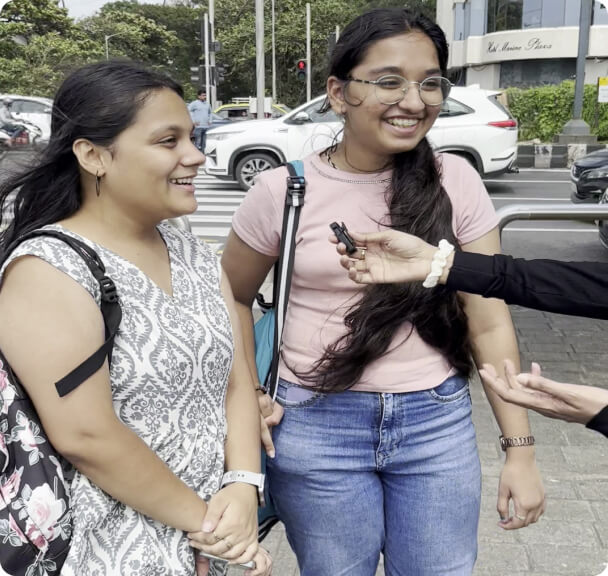
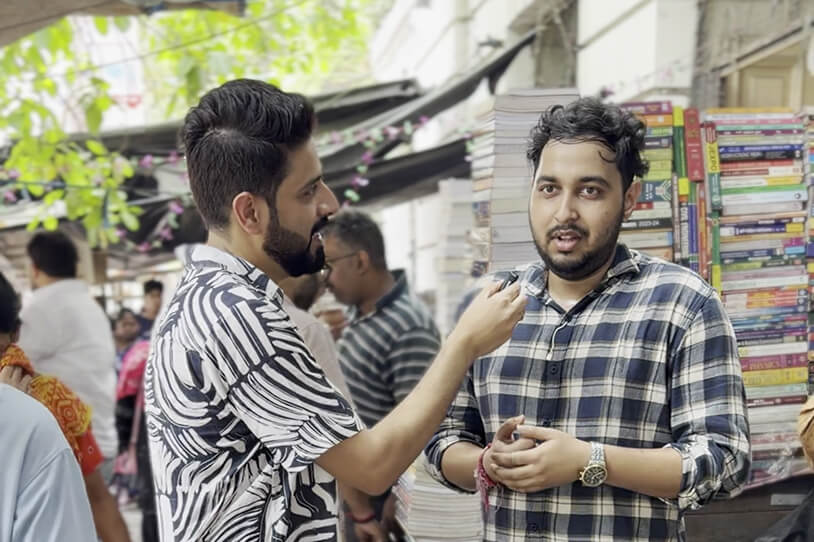
We stopped people and asked them what they were reading and about the book that has stayed with them to this day.
To these questions, we received a myriad of answers. Someone was midway through Mario Puzo’s last novel, The Family, completed after his death by his partner Carol Gino. “It’s quite intriguing, well written and well researched,” they told us. Another had grown up with Rick Riordan’s Percy Jackson series and kept coming back to it. Tagore came up more than once, as he tends to do in conversations about literature. One person was reading Wastra, a gangster thriller whose protagonist they described as “an amalgamation of various other gangsters.” Characters like that, they said, are the reasons they read fiction.
What struck us was not just what people were reading, but how they spoke about it. With specificity, with feeling, with the ease of someone describing an old friend.
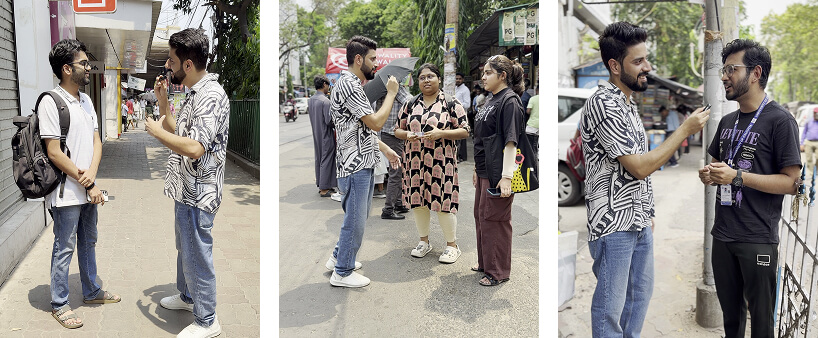
What struck us was not just what people were reading, but how they spoke about it. With specificity, with feeling, with the ease of someone describing an old friend.
An Old Friend
The story of books shows us just how long and interesting a relationship we have had with them. It begins in 4th millennium BCE Mesopotamia, where an unknown individual used markings on clay to represent goods and transactions. The earliest known named author in history was a woman, the Akkadian princess Enheduanna, who composed temple hymns around 2300 BCE and signed her name to them. From the very beginning, books were how humans said: this thought is worth keeping.
Gutenberg’s printing press in the 1450s changed the scale of everything. Books became reproducible, affordable, and eventually unavoidable. What had once been the exclusive preserve of scribes, priests and kings was now, slowly and then all at once, available to everyone. Libraries followed, then lending libraries, then reading groups. Books moved through communities, across generations, changing hands and changing minds.
And through all of it, the object itself endured. The clay tablet became the manuscript, the manuscript became the printed book, the printed book became the paperback. The form kept changing. The magic behind them never did.
The clay tablet became the manuscript, the manuscript became the printed book, the printed book became the paperback. The form kept changing. The magic behind them never did.
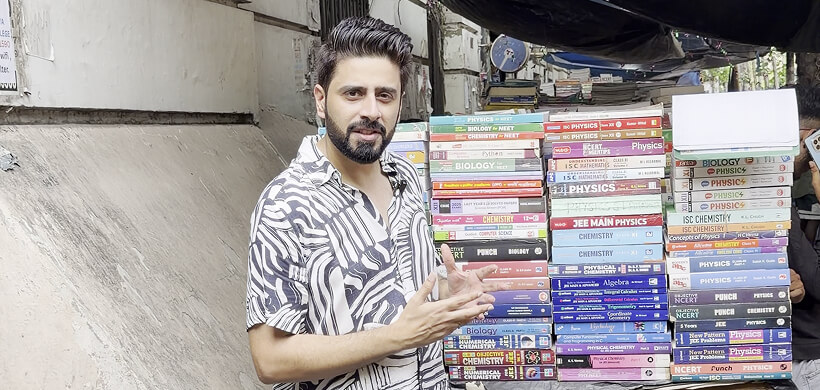
Why Books Matter
A book does something that most forms of entertainment cannot. It gives you more than you present. It asks for your full attention, and rewards you with insight into different situations, ideas, characters and worlds.
The people we met on the streets of Kolkata understood this very well. One told us they preferred a physical book because it felt like a prize. The bookshelf, the feel of the pages, the smell. “You can feel and smell the book,” they said, in a way that needed no further elaboration.
That is where paper comes in. It is not incidental to the experience of reading. It is an experience. The weight of a hardback, the give of a paperback, the particular sound a page makes when you turn it. More than just sensory details, these are ways in which a book introduces itself as something real.
As something that belongs to you.