How Kolkata showed us what it means to truly live with literature
There are cities that change with time.
Haphazard semi-urban sprawls turn into big skyscrapers; luxury cars replace old timey rickshaws, and, for better or for worse, life changes.
Then there are cities that manage to save their old selves from the dustbin of history. Kolkata belongs to this second category. It is a place where the past meets the present, where the razzle-dazzle of 21st century infrastructure coexists with its old soul, in the rumble of yellow taxis, the cozy addas and neighbourhood libraries.
It is a city that in many ways stands apart from its counterparts. Its uniqueness shows not only in the culture and cosmopolitan sensibilities, but also in its relations with literature and paper.
We at Paper Matters recently had the privilege of visiting this city. A visit that showed us how little we actually knew about the love this city has for literature.
“Until I feared I would lose it, I never loved to read. One does not love breathing.”
— Harper Lee, To Kill A Mockingbird
In the City of Joy
Dominique Lapierre chose Kolkata for his 1985 novel because he believed it to be a place where the human condition showed itself most fully. Forty years on, that instinct feels less like a writer’s choice and more like an objective truth.
We arrived with questions about paper and left with something closer to a lesson about what a city can decide to value.
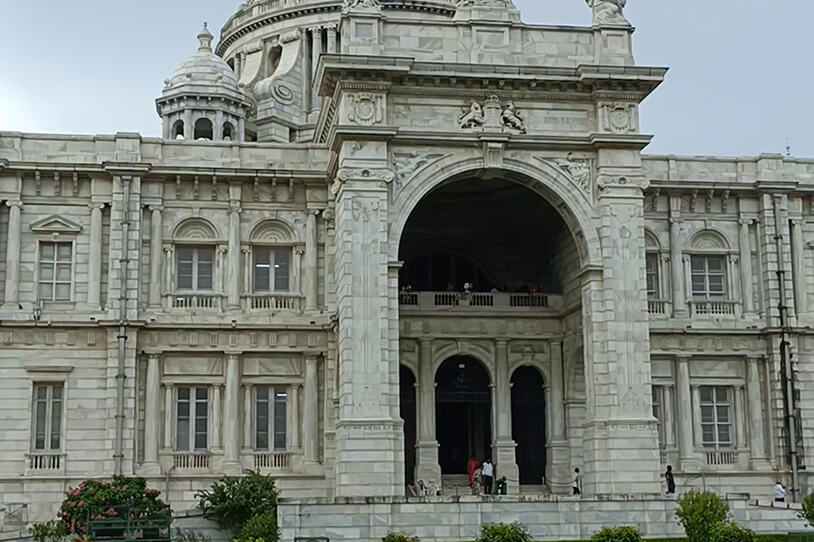
Our conversations began at the Maidan, the vast open ground often called the ‘lungs of Kolkata’. It moved slowly toward the Victoria Memorial, the great white marble mark of the British Raj, on to an old colonial boulevard at Chowringhee Road.
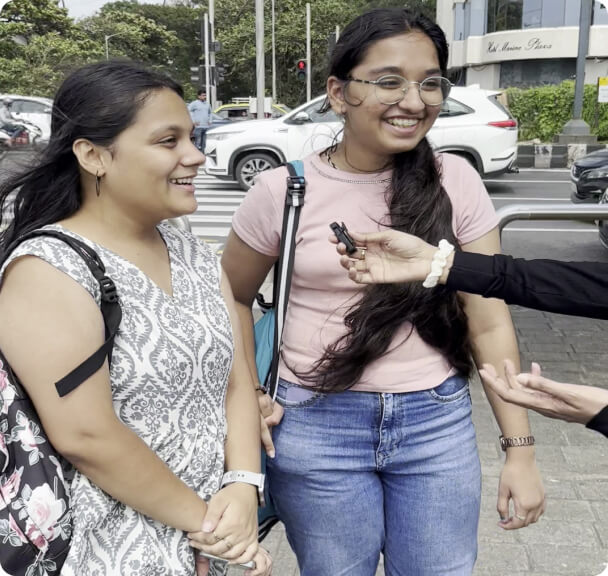
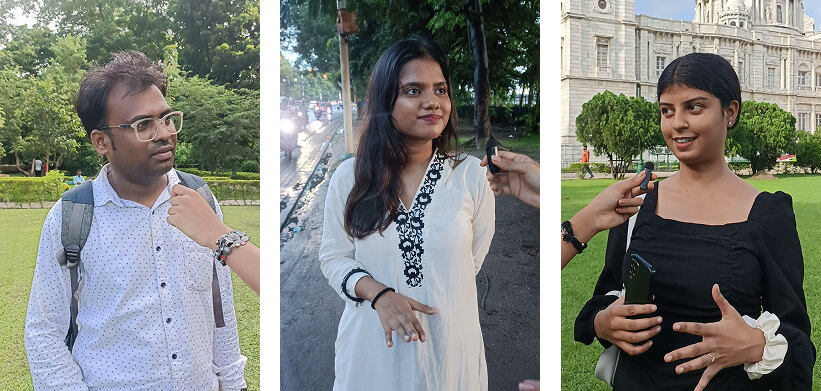
As we strolled, we asked people about books, their likes and dislikes. We also tried to understand their thoughts on reading and what paper meant to them.
The answers were enthusiastic.
“Literature has shaped the city of Kolkata. Initiated by Tagore, the people of Bengal are taking the legacy forward,” one person told us.
Another spoke of paper as something that enters life early and stays: “We start with paper early in our childhood. Ever since we started school, paper has become a part of our lives.” And a third, perhaps most pointedly, said that whenever they think of the city’s heritage and tradition, paper comes to mind.
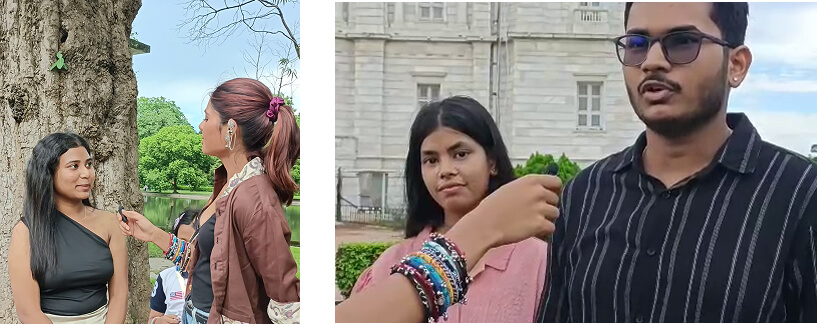
We arrived with questions about paper and left with something closer to a lesson about what a city can decide to value.
Where Literature Lives
This relationship between Kolkata and literature is not new.
Being the former capital of British India, it became a center for learning and new thinking at a time when the world was teeming with ideas of all kinds. A time when ideas carried enormous consequence. The city’s printing industry played a massive part in building India’s book trade, its institutions seeded the Bengal renaissance, a movement that, gave towering literary voices to the subcontinent in Raja Ram Mohan Roy, Rabindranath Tagore, Bankim Chandra Chattopadhyay and many more.
The energy of that movement would endure, find its way to every street and give birth to more movements. Like the Little Magazine Movement. In the 1920s, the state of Bengal experienced a surge of anti-establishment and modernist writing, coming from small journals. This was a movement that never really died. Writers and poets still publish small periodicals at their own cost, driven by the same conviction that literature deserves a platform regardless of whether it is profitable.
Thanks to the emergence of public and neighbourhood libraries, there was even a time, in the mid-20th century, when Kolkata had more libraries per capita than London or New York. Many were modest, single-room reading spaces tucked into working-class neighbourhoods, built not as institutions but as expressions of a shared belief: that access to books belonged to everyone.
This was the connection that every neighbourhood of the city had, to literature and the paper in which it was published.
Thanks to the emergence of public and neighbourhood libraries, there was even a time, in the mid-20th century, when Kolkata had more libraries per capita than London or New York.
Still Reading
A well-read city often resembles a well-read person. It carries a different kind of tolerance for complexity, comfort with ideas and crucially, the ability to do what Oscar Wilde once regarded as ‘playing gracefully’ with them.
Kolkata has carried this for a long time. The notebooks passed around in coffee houses, the periodicals printed and shared at personal cost, the second-hand books that changed hands across generations. Paper has been the medium through which the city has kept thinking.
Even in the digital age, Kolkata is one of the cities that values the role of literature, and the paper on which it is printed.