How a simple act with paper opened space for expression in Kolkata
Time heals all wounds.
A line often uttered by people who have an optimistic way of seeing the world. They believe that hardships pass, and the things we feel today give way eventually, most often to completely different feelings.
This is a truth, one which dictates the amusing circle of life.
Even so, not all emotions settle with time. What remains unexpressed often stays unresolved, especially in minds still learning how to interpret what they feel. These can weigh heavy, and quietly take the shape of persistent sadness, withdrawal, or a growing sense of being misunderstood. According to the World Health Organisation, one billion people worldwide live with a mental health disorder, and one in seven adults in India need mental health support. Behind these numbers are people, those who are carrying weight that was never given a place to land.
“My mind turned by anxiety, or other cause, from its scrutiny of blank paper, is like a lost child–wandering the house, sitting on the bottom step to cry.”
— Virginia Woolf, A Writer’s Diary
The Heart and Paper
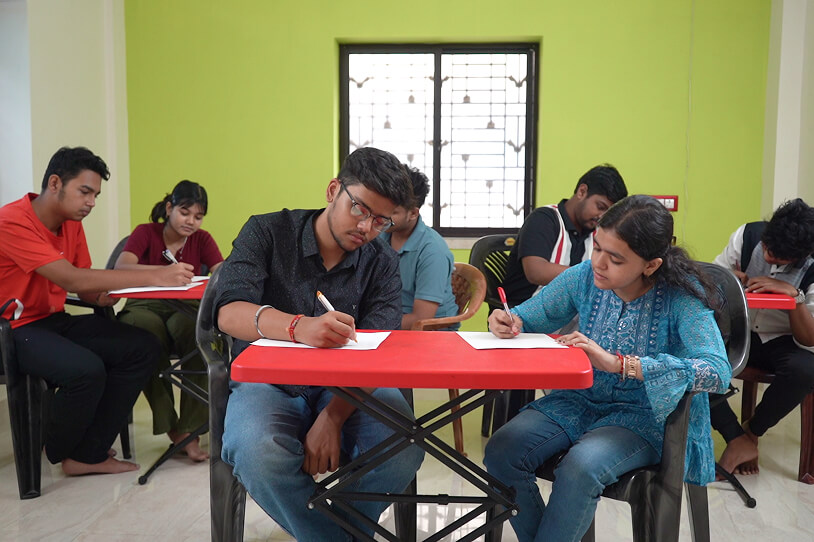
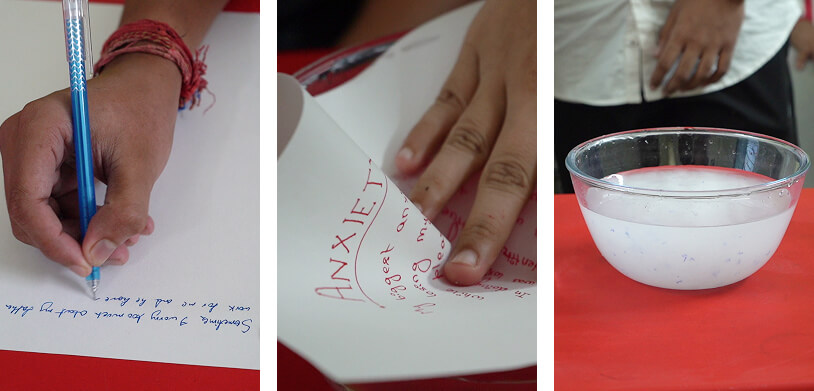
On World Mental Health Day, in Kolkata, we invited people for an interesting activity. They were to write down their negative emotions on water-soluble paper and dissolve it completely in water. No instructions beyond that. No facilitation of what to feel afterward.
We watched as each one of them filled the pages. Some with anxious scribbles, others with slight or ponderous movements.
Studies show that expressive writing leads to significant reductions in symptoms of depression and anxiety. But research rarely captures the pictures that form in such moments. It cannot show what it looks like when a single person’s face softens in relief.
According to the World Health Organisation, one billion people worldwide live with a mental health disorder, and one in seven adults in India need mental health support.
What People Felt
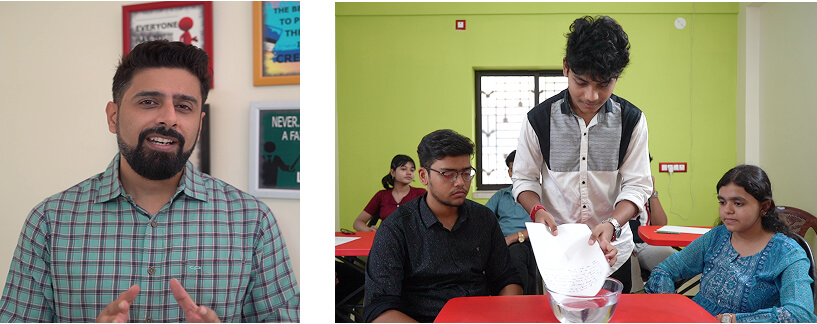
Our participants stood over the bowls, holding their pages above it. Seconds later, they silently dropped the pages in.
‘As I watched the paper dissolve in water,” one of our participants later recalled, “I felt as if my fears were fading away, melting with the paper”.
This was a sentiment shared by many. Another participant remarked “I felt that a heavy storm had cleared. Every trouble dissolved in the water, and I feel much lighter and more confident now.”
Seeing the problems dissolved, made our participants feel the fleeting nature of these problems.
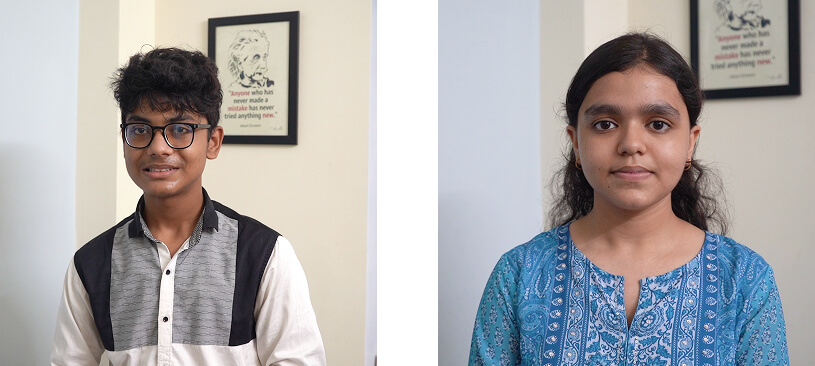
Seeing the problems dissolved, made our participants feel the fleeting nature of these problems.
Letting It Out
We have known for a while that early recognition matters. That family, friends, and community stepping in before a condition deepens can change its entire course. What we did not always know was how small that first step could be.
One way of taking that step is encouraging people to write about their feelings and emotions on paper and letting them go. Writing down emotions allows us to process the inner turmoil. Once on the page, the simple act of burning, shredding, or dissolving that paper brings a metaphorical release. It can help us let go of toxic emotions and a negative sense of self.
The Power of Expression
Paper made possible this reflective experience. It acted as an opening. A place where feeling something difficult became, for a moment, manageable.
We find ourselves thinking about how much goes unexpressed simply because there was never a prompt, never a piece of paper placed in front of someone at the right time.
That is what we tried to offer in Kolkata. And what we saw in return was something we will carry forward as an important reminder of the relationship between our emotions and paper.