What Mumbai thinks about paper, memory, and why it still matters.
What does paper mean to you?
A simple question with many interesting answers. Is it a space for expression? A utilitarian tool for storing knowledge? A bridge to the past?
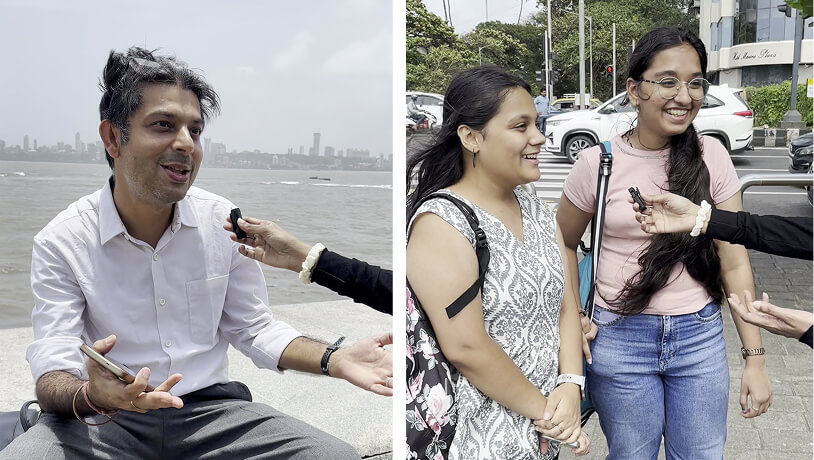
In our latest edition of Paper Stories, a series dedicated to capturing real people sharing real memories connected to paper, we travelled to Mumbai to ask Mumbaikars the same question.
“You start out putting words down and there are three things — you, the pen, and the page. Then gradually the three things merge until they are all one and you feel about the page as you do about your arm. Only you love it more than you love your arm.”
— John Steinbeck, Working Days: The Journals of The Grapes of Wrath
Paper Stories
Paper is a vessel. It carries the letters we scribble, the words they form, and the inevitable stories they tell. We started Paper Stories because we understood this.
We took to the streets with a single question and an open ear. The aim was to capture authentic experiences people have had with paper. We wanted to collect diverse perspectives across generations, professions, and cities, and for this, Mumbai was the perfect first stop.
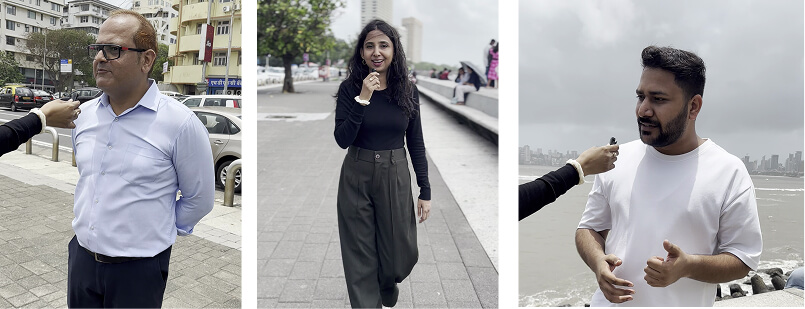
Paper is a vessel. It carries the letters we scribble, the words they form, and the inevitable stories they tell.
What We Heard
We asked Mumbaikars about their relationship with paper: whether they had written letters, whether writing by hand still felt different, whether it meant something more. What came back was a flood of forgotten moments and quiet revelations.
On handwritten letters, the responses were telling. “When I can’t say it in person, I write it and give the note,” one young woman told us. When words are difficult to say out loud, paper becomes the place where they finally find form. Thoughts that feel tangled in conversation come out more clearly when written by hand. Something about the act of writing slows the mind down enough to find them.
On whether writing on paper is more special than digital text, the answer was an emphatic yes. “Absolutely. Because you are physically involved in writing and then seeing the ink on paper,” said one woman. Being physically involved, seeing ink appear on a page, shaping each letter, was described as personal, even soothing.
Several people pointed out that the benefits are not only emotional. “Even as a student, when you write and learn, especially Math or other subjects, that makes it clearer.” The hand and the mind, it turns out, are better partners than the finger and the touchscreen.
The comparison with typing brought out some of the most candid responses. “When you are typing, there’s autocorrect, emojis, most used emojis. You’re basically repeating the same things,” observed one young person. Paper, by contrast, demands something more. There is no easy undo. Backspace is not an option.
Thoughts that feel tangled in conversation come out more clearly when written by hand. Something about the act of writing slows the mind down enough to find them.
You need to restart, so you keep putting things together more meaningfully.” Another recalled the days of whiteners with a laugh: “Not that Control-Delete or Delete all. You had to write it all over again.”
That difficulty, far from being a flaw, is precisely what makes writing on paper meaningful.
A Generation Choosing Paper
What made the Mumbai visit particularly striking was the younger voices, Gen Z, a generation that has grown entirely online, and yet is quietly turning back to paper.
One man observed it with concision: “They are more conscious of all the effort that society is taking at large. So that’s good.” He is right. This generation is hyper-conscious of the world they are inheriting, its climate, its waste, its consequences. Conversations revealed that to Gen Z, the act of choosing paper is meaningful. They value paper because of its biodegradability, and avoid or boycott substances like plastic, which is non-biodegradable.
This line of thinking finds its roots in values. Gen Z is increasingly unwilling to separate the choices they make as consumers from the beliefs they hold as people. Paper, for many of them, is not just the more sustainable option. It is the most honest one.
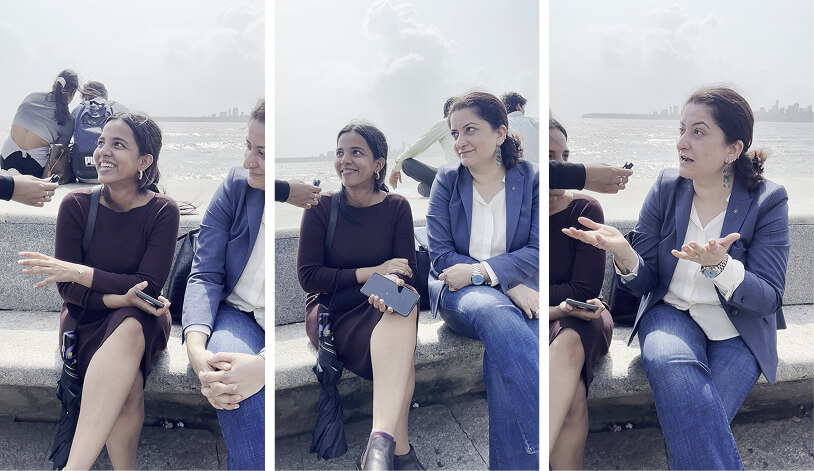
What we witnessed at Marine Drive was a generation that is not just talking about change. It is living it, one deliberate choice at a time.
Stories Everywhere
In Mumbai, every person we spoke to had a story. A letter kept in a drawer. A notebook filled with thoughts. A memory that came rushing back the moment paper was mentioned.
Paper has always been where we put the things that matter. It is where we have expressed our feelings, and passed down our knowledge.
We believe these stories are worth telling, and we are just getting started. We wish to continue telling the universal story of paper, one that is still being written.