How a forgotten school in rural Maharashtra is helping children find their love for learning.
24.8 crore children go to school in India.
This number, presented by the Ministry of Finance in the Economic Survey 2024-25, shows how large a population Indian schools serve. 14.72 lakh schools with 98 lakh teachers try to educate students from all kinds of backgrounds, diverse in both socio-cultural and economic realities.
However, some numbers never show up in surveys and evaluations.
How many students actually enjoy going to school? How many schools go out of their way to make subjects interesting for students?
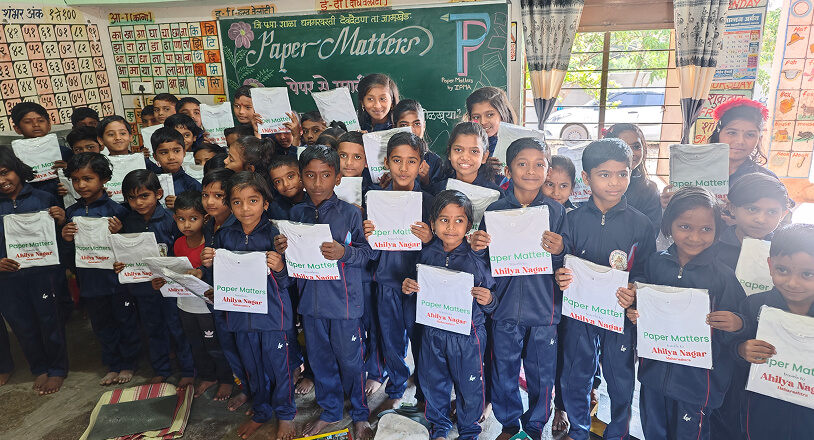
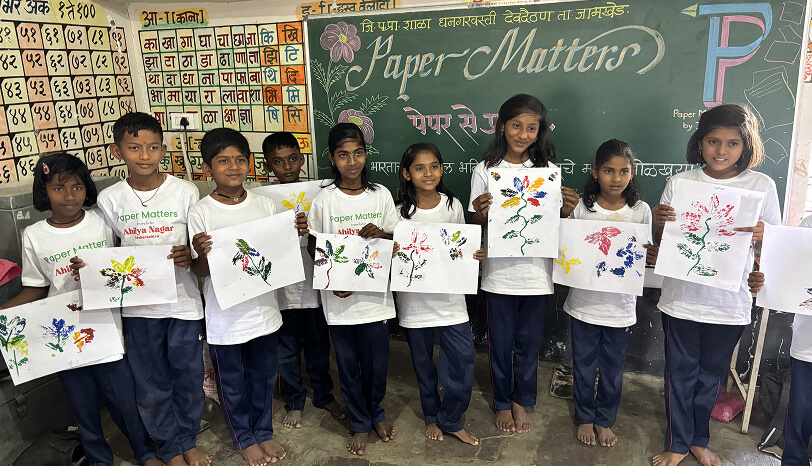
We may not have the numbers, but Paper Matters encountered just such a school, with excited and motivated students, when we travelled to Zila Parishad Primary School in Dhangarwasti, Jamkhed, Ahilya Nagar, in collaboration with educator and changemaker Lahu Borate.
“Education is the most powerful weapon which you can use to change the world.”
— Nelson Mandela
Out of the Shadows
When we entered the school, watching students sitting, giggling and hopping about, it was hard to imagine there could be a livelier place. The place felt as if it had always been filled with noise.
This, however, was not true. A few years ago, this school had four students. The building had no water, no electricity, and no washrooms. The families of Dhangarwasti, consisting largely of cane cutters who migrate for work every year, always left their children in the care of neighbours or simply at home. For the children of Dhangarwasti, getting an education was not an option. Not until Lahu Borate arrived.
He started teaching, and eventually began building, in every sense of the word. He earned the trust of the children, then of the community, and eventually of strangers on the internet. Over 1.5 lakh people rallied behind him on social media. Government officials and donors followed. The school that once stood forgotten now has 55 students, clean drinking water, proper washrooms, nutritious weekend meals, and a developmental plan that Lahu is steadily putting into action.
More than the infrastructure, the school has succeeded in building a culture of curiosity.
14.72 lakh schools with 98 lakh teachers try to educate students from all kinds of backgrounds, diverse in both socio-cultural and economic realities.
Paper and Pragati
“We won’t be able to learn,” said a student when asked what would happen in the absence of paper. “We won’t be able to draw pictures, read, or write.”
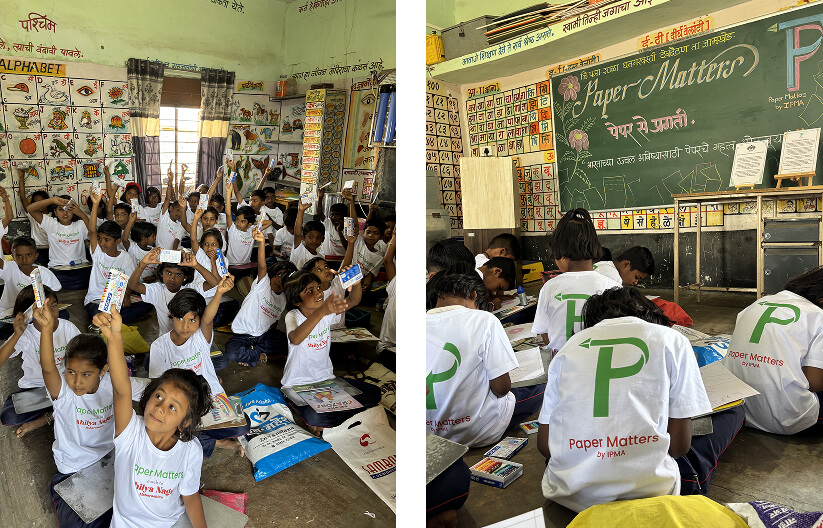
A simple answer, but one which made us ponder. When we collaborated with Lahu and his students at the event Paper se Pragati, we saw exactly what that student meant. The students saw paper as an outlet for both learning and creating.
Paper, for them, is not a school supply. It is something they value. Watching that was a powerful reminder of why Paper Matters exists and what we are trying to say about this material that the world takes for granted.
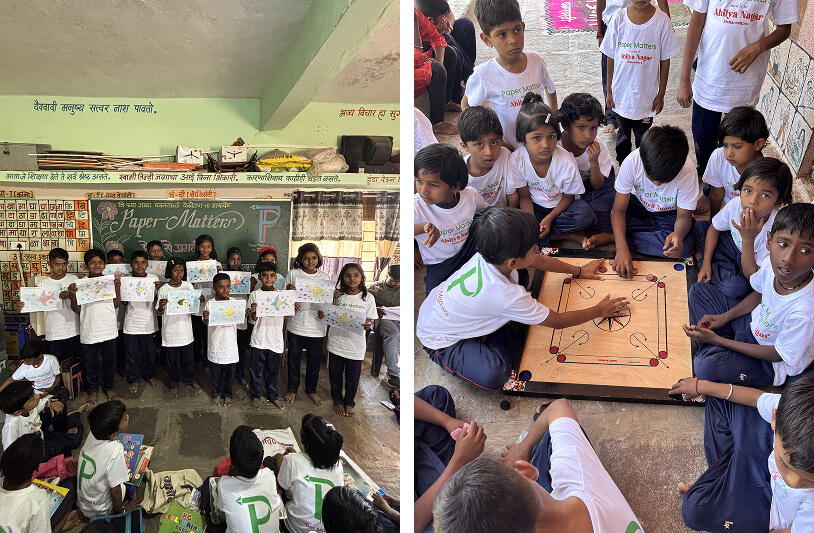
The students saw paper as an outlet for both learning and creating. Paper, for them, was not a school supply.
A Road Well Taken
Lahu Borate has done some remarkable things with the school. The reason his changes resonate is because they are replicable. A school, a community, a committed individual, and the belief that children deserve better. That is the formula, and it works.
At Paper Matters, we are proud and honoured to have been a small part of this story. We hope it encourages other organisations, individuals and businesses to find their own Dhangarwastis and build from the grassroots.