How educators in Kerala are making the case for Paper in education
What is better for learning: Paper or Screens?
This debate is no longer abstract. It is playing out in real classrooms, between educators and decision-makers across India and beyond. A debate where paper, even in today’s digital era, is proving itself a powerful partner in education.
This was made much more apparent when the Paper Matters Travels To series arrived in Kerala. Our destination in this state of remarkable literacy and education was the Govt. Boys Higher Secondary School in Perumbavoor, this is a place where teachers and students have made paper the backbone of the learning journey.
“Develop a passion for learning. If you do, you will never cease to grow.”
— Anthony J. D’Angelo
The Educators of Perumbavoor
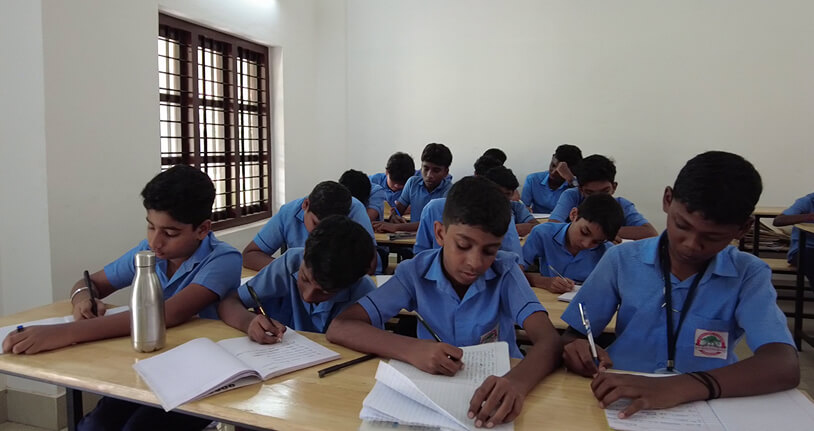
We arrived at Govt. Boys Higher Secondary School, Perumbavoor, and were welcomed into a timeless space. Where classrooms are alive with the scratching of pens. Notebooks dense with margin notes. Textbooks worn with the affection of use.
We sat with the teachers and the principal, who spoke about what they observe every day. Students who read on paper retain more. Writing an answer by hand helps them understand it, which is better than merely scrolling past it. They spoke about the tactile relationship between a child and the page and how it slows them down in a way that enables learning.
Paper, they told us, is more than just a medium. It structures thought, improves a student’s writing skills, and leaves a record of important details in the mind.

Students are struggling to focus. Their memories are faltering. Their ability to sit and brood over ideas is disappearing… In short, excessive reliance on digital devices is impairing how children learn.
What Screens Cannot Give
This is the age of screens. They have taken over classrooms as students across India are being equipped with ICT tools, tablets, interactive displays, etc. They have been helpful, but the consequences are beginning to show.
Students are struggling to focus. Their memories are faltering. Their ability to sit and brood over ideas is disappearing. Research shows that excessive screen use negatively affects children’s ability to develop foundational cognitive skills. In short, excessive reliance on digital devices is impairing how children learn.
Sweden is a prime example. A country that once embraced ed tech eagerly has now become the first one to change course. With dropping academic performances, it pulled back digital tools from classrooms and returned to paper-based learning, emphasising the usage of physical textbooks.
Paper invites engagement. The drag of pencils, the rhythm of handwriting, the feel of a page – when students write by hand, they understand more deeply, remember more durably, and think more clearly. It is not only a catalyst for learning but also beneficial for their mental well-being.
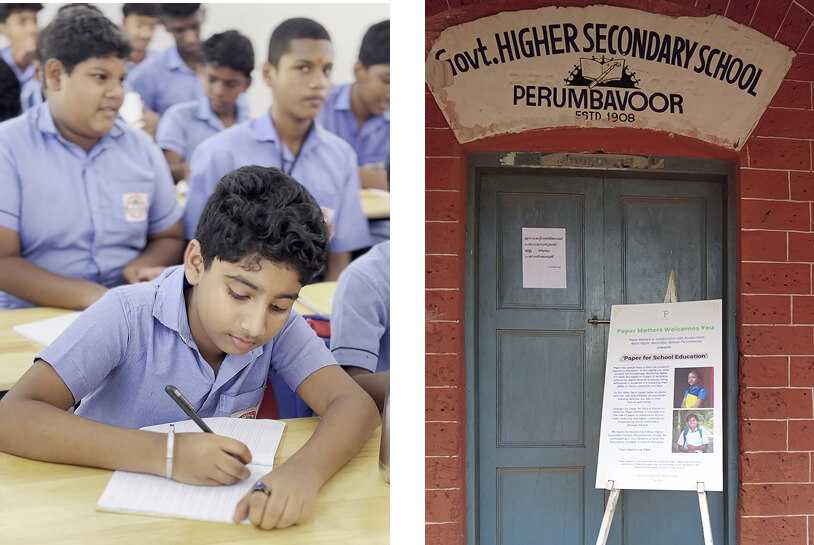
Paper invites engagement. The drag of pencils, the rhythm of handwriting, the feel of a page – when students write by hand, they understand more deeply, remember more durably, and think more clearly.
A Pledge for Paper
At the end of our visit, the teachers took a pledge to support paper. These individuals who have spent years watching children learn while turning pages pledged to champion paper’s role in the classrooms.
“My message to teachers and educators,” Headmistress of the school Ms Beena P C appealed, “is to encourage paper-based education. Use digital devices only if paper is not available”.
True to this message, the school stands behind the Paper For School Education initiative with a hope to ensure that the next generation of students inherits paper.
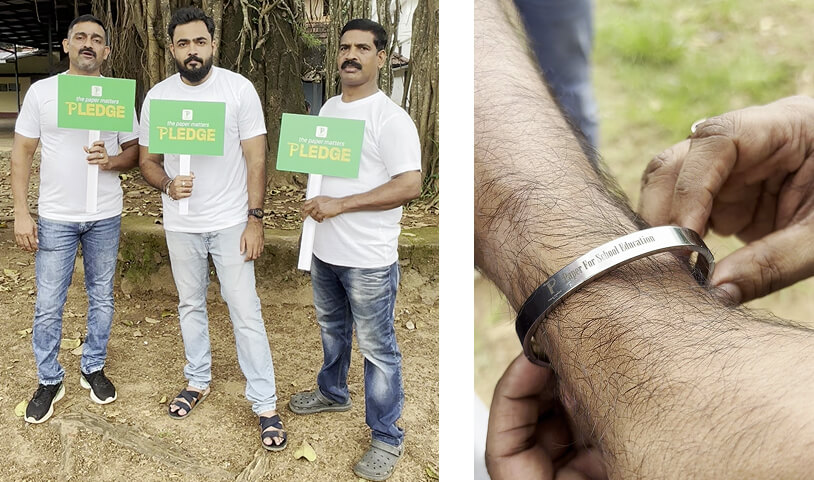
Paper Over Everything
The Paper For School Education campaign by Paper Matters is here to make sure that modernisation does not discard what is effective. Paper has proved, be it in Sweden or Perumbavoor, that it is a great ally to learning.
Making the case for this cause school by school, teacher by teacher, and student by student, we are here to remind India that the tools that have shaped its greatest minds are still worthy of a place in every classroom.